


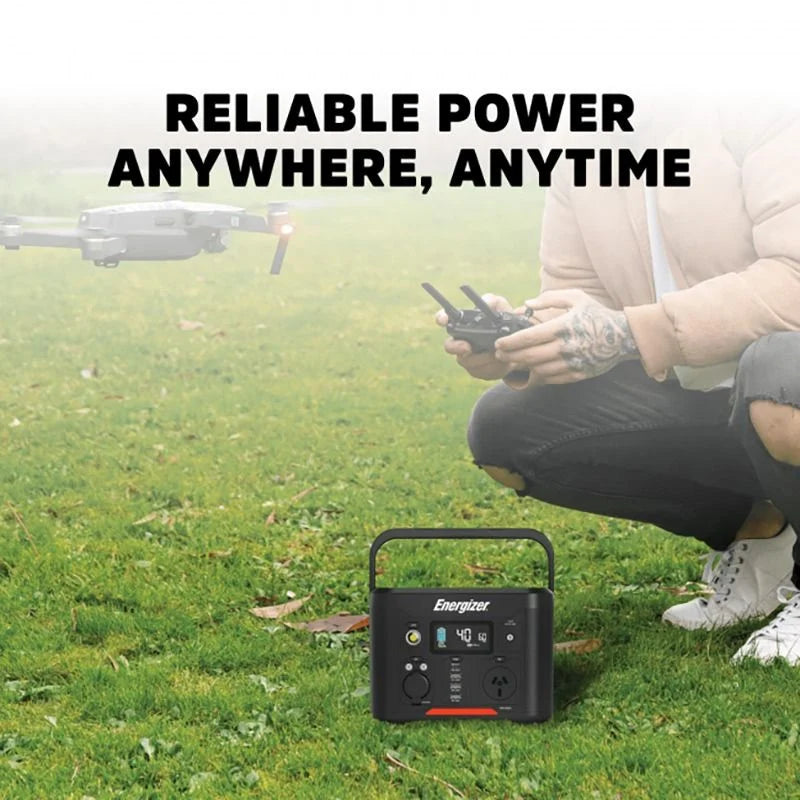
Power, unpacked
- ⚡ Advanced battery management
- ⚡ Tough & durable
- ⚡ Multi-function LCD screen & flashlight
- ⚡ Completely portable
- ⚡ AC outlet
What 296Wh actually runs
Capacity is the number that matters, and 296Wh is a weekender rather than a base camp. Through the AC inverter you lose roughly 15% to conversion, so plan on about 250Wh at the outlet — around 16 phone charges, 4 to 5 laptop charges, a night on a CPAP with the humidifier off, or 30-plus hours of LED camp lights. Run 12V gear straight from the DC socket instead and you keep closer to 265Wh, because you skip the inverter entirely.
Where the 300 stops
The inverter is rated 300W continuous with a 600W peak. That covers laptops, drones, cameras, fans, lights and a CPAP comfortably. It will not run anything with a heating element — kettles, toasters, hair dryers and induction cooktops draw 1200W to 2400W, well past the ceiling, and would flatten the battery in minutes even if they started. A 12V camping fridge will run, but on a hot Australian day a 40L fridge can want 500Wh or more across 24 hours, which is more than this unit holds. If a fridge is the reason you are buying, size up to the Everest 500.
Pure sine wave, which is not a given at this size
The 300 puts out a true pure sine wave at 230V/50Hz. Cheaper units in this bracket use a modified sine wave, which is fine for a torch charger but can make a CPAP, a fridge compressor or anything with a motor buzz, run hot, or refuse to start altogether. If you are buying for medical equipment, this is the specification to check first on any brand.
Recharging it
Both the DC input and the USB-C input are capped at 45W. On paper that is about 6.5 hours from empty; in practice allow 8 or so, because charging tapers as the battery fills. The USB-C port is bi-directional at 45W, so a laptop wall charger you already own will refill it — handy if the supplied cable stays home. From the Sunpack 80W folding panel the 45W ceiling becomes the limit rather than the panel, so budget most of a sunny day for a full charge.
The honest trade-off
These are lithium-ion (NMC) cells with a 24-month Australian warranty, not the LiFePO4 chemistry that newer premium units use. LiFePO4 is rated for far more charge cycles and copes better with heat, and it costs more. For a handful of trips a year plus blackout backup, the difference will not decide anything. If you plan to cycle the battery hard every week for years, pay up for LiFePO4 — we would rather tell you that now than have you find out later.
What can it power?
- Mobile devices: 24 charges*
- Laptops: 4 charges*
- Television: 4 hours*
- Mini cooler: 4 hours*
*Approximate figures — actual results vary with device and conditions.
Specifications
| Size | 215 x 160 x 192mm |
|---|---|
| Weight | 3.4kg |
| Capacity | 296Wh (20,000mAh / 14.8V) |
| AC Output | 230V/50Hz, pure sine wave. Total 300W, peak 600W |
| DC Output | 1 x DC auto outlet 12V/10A · 2 x DC 5.5mm port 12V/5A |
| USB-A Port | 2 x USB-A 5V/2.4A |
| USB-C Port | 1 x 18W max · 1 x 45W max, bi-directional |
| Input | DC 5.5mm 45W max · USB-C 45W max |
| Material | ABS plastic and polycarbonate |
What's in the box
- 1 x Everest 300 Portable Power Station
- 1 x Charging cable (AC/DC)
- 1 x User manual
Additional information
| Condition | New |
|---|---|
| Release date | 9th January 2023 |
| Weight (kg) | 4.41 |
| Item Code | 196076 |
| Product Type | Batteries |
| Barcode | 9359125000169 |
| Manufacturer | Energizer |
| Connectivity / Sockets | USB, USB-C |
You may also like
-
Energizer Everest 1100W Power Station
1166Wh1000W outputRegular price $799.95Sale price $799.95 Regular price$1,799.00 -
Energizer Sunpack 80W Solar Panel
80WFoldableRegular price $199.95Sale price $199.95 Regular price$249.00 -
Energizer Everest 500W Power Station
515Wh500W outputRegular price $499.95Sale price $499.95 Regular price$999.00 -
AFL Evolution 2
PLAYSTATION 4OFFICIAL AFL LICENCERegular price $29.95Sale price $29.95 Regular price


