


Power, unpacked
- ⚡ Tough & durable
- ⚡ Advanced battery management
- ⚡ Charge via solar panel
- ⚡ 9 layers of safety protection
- ⚡ 2 x AC outlets
What 1166Wh and a 1000W inverter change
The jump from the Everest 500 is not just more hours, it is a different list of appliances. A 1000W inverter brings a microwave, a coffee maker, a blender, a camping heater and most power tools into range — none of which the 500W units can start. Capacity roughly doubles too: against about 990Wh usable at the AC outlet, a 40L 12V fridge averaging 25W runs for the better part of two days, or a full weekend once you add phones, lights and a laptop.
What still will not run
A 1000W ceiling is generous but not unlimited. Kettles, toasters, hair dryers and induction cooktops sit at 1200W to 2400W and remain out of reach, as does any air conditioner. A microwave will run, but a 1000W microwave draws closer to 1500W from the wall than its cooking rating suggests, so check the plate on yours before you count on it. This is the honest ceiling — a bigger inverter number on a spec sheet does not change what physics allows out of the battery.
Weight is the real trade-off
At 11kg the 1100 is a caravan, ute-tray or camper-trailer unit, not something you carry to a walk-in site. If you are pitching a tent within a few metres of the car it is fine; if you are moving it around a campsite daily, the 5.6kg Everest 500 is a far more pleasant object to live with. Buy the 1100 because you need two-plus days off-grid or mains appliances, not because bigger sounds safer.
Recharging it
The DC input is rated 24V/5A, about 120W, and USB-C PD accepts 100W. From flat that is roughly 10 hours on paper and closer to 12 in practice. Solar is where the size starts to bite: a single 80W panel returning 250-400Wh on a good day needs three to four days of sun to fill this battery from empty. If you want to run the 1100 genuinely off-grid for a week, plan on more panel than one. Note also that the Sunpack 80W outputs 18V while this unit's DC input is specified at 24V — talk to us before you assume that pairing works, because we would rather check than guess.
The honest trade-off
Lithium-ion (NMC) cells with a 24-month Australian warranty. In this capacity class most 2025-26 competitors have moved to LiFePO4 with longer warranties, and they charge accordingly. What you get here is a familiar brand, genuine Australian stock, local warranty support and a real phone number, at a price the LiFePO4 units do not reach. That is the trade, stated plainly.
What can it power?
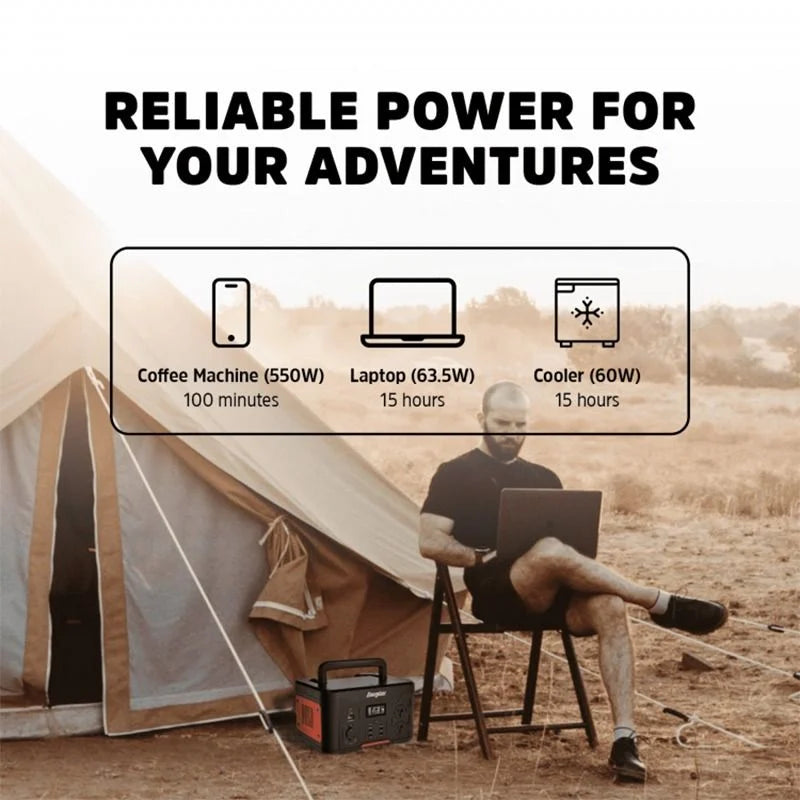
- Blender: 2 hours*
- Coffee machine: 100 minutes*
- Laptop: 15 hours*
- Mini cooler: 15 hours*
*Approximate figures — actual results vary with device and conditions.
Specifications
| Size | 340 x 235 x 206mm |
|---|---|
| Weight | 11kg |
| Capacity | 1166Wh (21.6V / 54,000mAh) |
| AC Output | 230V/50Hz 1000W max · AC port 1 & 2 |
| DC Output | 1 x DC auto outlet 12V/10A · 2 x DC 5.5mm port 12V/5A |
| USB-A Output | USB 1 & 2: QC 3.0 18W · USB 3 & 4: 5V/2.4A |
| USB-C Output | USB-C 1: PD 100W · USB-C 2: PD 27W |
| Input | DC port (6.3mm) 24V/5A · USB-C PD 100W |
| Material | ABS plastic and polycarbonate |
What's in the box
- 1 x Everest 1100 Portable Power Station
- 1 x Charging cable (AC/DC)
- 1 x User manual
Additional information
| Condition | New |
|---|---|
| Release date | 9th January 2023 |
| Weight (kg) | 13.85 |
| Item Code | 196078 |
| Product Type | Batteries |
| Barcode | 9359125000275 |
| Manufacturer | Energizer |
| Connectivity / Sockets | USB, USB-C |
You may also like
-
Energizer Sunpack 80W Solar Panel
80WFoldableRegular price $199.95Sale price $199.95 Regular price$249.00 -
Energizer Everest 500W Power Station
515Wh500W outputRegular price $499.95Sale price $499.95 Regular price$999.00 -
Energizer Everest 300W Power Station
296Wh300W outputRegular price $269.95Sale price $269.95 Regular price$599.00 -
AFL Evolution 2
PLAYSTATION 4OFFICIAL AFL LICENCERegular price $29.95Sale price $29.95 Regular price


